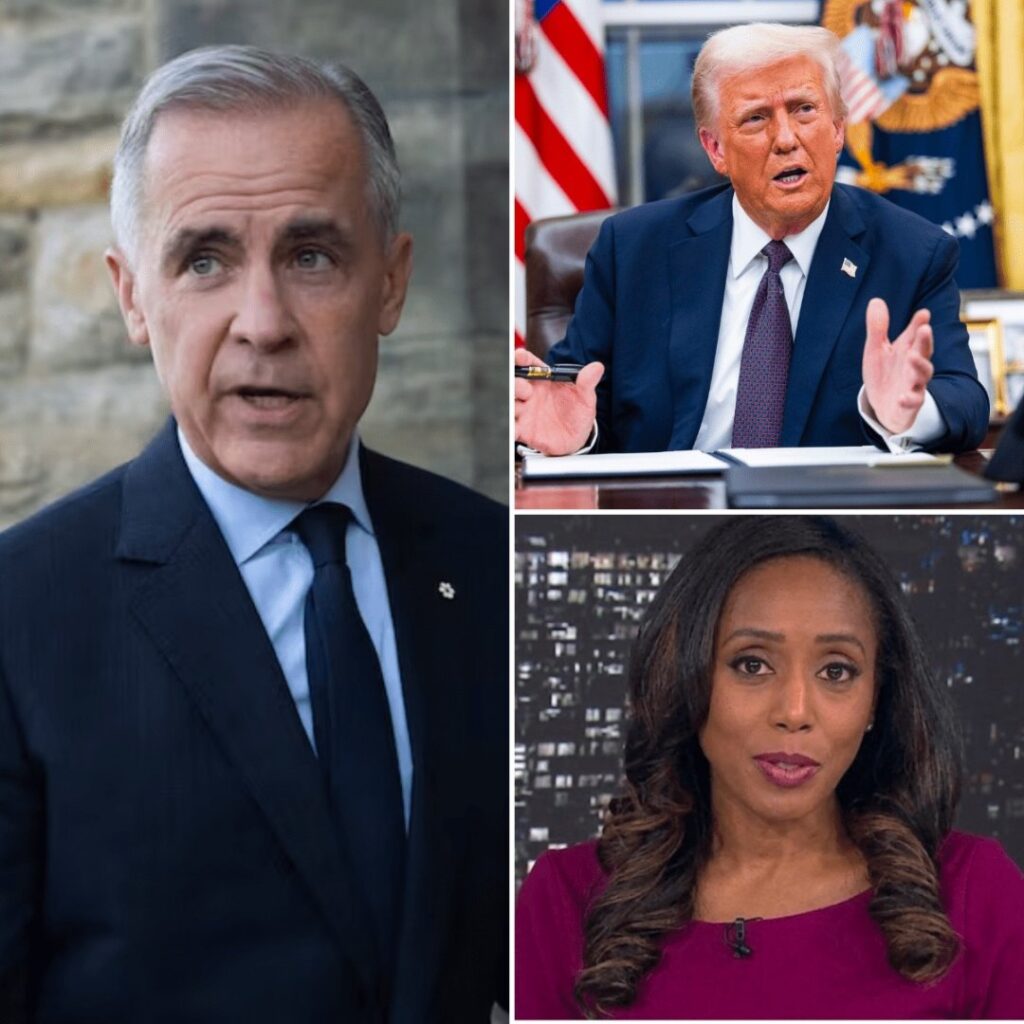
In a development that has caught many observers off guard, European leaders have quietly extended an invitation to Canada to participate in a high-level continental summit—an unexpected move that may signal a broader transformation in global political alignments.
At the center of this moment is Mark Carney, who is attending the European Political Community Summit hosted in Armenia. Originally conceived as a platform for European nations to coordinate responses to shared challenges, the summit has, until now, remained largely exclusive to the continent and its immediate neighbors.
The inclusion of Canada—a country geographically distant yet historically aligned with Western institutions—marks a notable departure from established norms. While no official declaration has framed the invitation as a policy shift, analysts suggest the implications extend far beyond a routine diplomatic gesture.
The European Political Community was established in the wake of the Russia-Ukraine War, with the aim of fostering coordination on issues such as regional security, economic resilience, and geopolitical stability. Its meetings have served as a forum for dialogue among European Union members and non-EU states alike, helping to bridge divides and align strategies in a rapidly evolving global environment.
Against that backdrop, Canada’s presence stands out.
For decades, the architecture of Western alliances followed a relatively predictable pattern: Europe managed its internal affairs and regional partnerships, while countries like Canada maintained a strong and consistent alignment with the United States. That model, while still influential, is now showing signs of adaptation.
Diplomatic sources and policy analysts point to a growing desire on both sides of the Atlantic to diversify partnerships. For Canada, this has meant gradually reducing overreliance on any single partner and expanding engagement with European institutions. For Europe, it reflects a search for stable, like-minded allies amid an increasingly uncertain global landscape.
Recent political fluctuations in Washington have contributed to that uncertainty, prompting European leaders to consider how best to reinforce their network of partnerships. In this context, Canada is emerging as a compelling counterpart—economically advanced, politically stable, and closely aligned on key democratic values.
The summit invitation offers more than symbolic recognition. It provides Canada with direct access to a forum where strategic decisions are discussed and coordinated at the highest levels. Participation in such settings can translate into influence over policies related to trade, defense cooperation, and financial coordination—areas where transatlantic collaboration continues to evolve.
Observers note that once a country gains entry into these decision-making spaces, its role can expand organically. Informal discussions, bilateral meetings, and shared initiatives often emerge from such gatherings, gradually reshaping the contours of international cooperation.
In practical terms, Canada has already been deepening its engagement with Europe through trade agreements, defense partnerships, and multilateral initiatives. Its involvement in the summit may accelerate these trends, reinforcing ties that extend beyond traditional frameworks.
At the same time, European leaders appear to be signaling openness to a more flexible approach to alliances. Rather than strictly adhering to geographic boundaries, the emphasis is shifting toward shared interests and strategic compatibility. This evolution reflects a broader reality: global challenges—from security threats to economic instability—are increasingly interconnected and require coordination beyond regional blocs.
Importantly, analysts caution against interpreting Canada’s inclusion as a replacement for existing alliances. The transatlantic relationship, particularly between Europe and the United States, remains a cornerstone of global stability. Instead, Canada’s participation is seen as complementary—adding another layer of cooperation rather than displacing established partnerships.
For Prime Minister Mark Carney, the summit represents both an अवसर and a test. His presence underscores Canada’s intention to play a more active role in shaping international responses to complex challenges. It also places the country in a position where expectations may grow, particularly if its contributions are viewed as constructive and consistent.
Reactions to the development have been measured but attentive. While some policymakers have welcomed the move as a pragmatic adaptation to changing circumstances, others are watching closely to see whether it marks the beginning of a more permanent shift in how such forums are structured.
What is clear is that the boundaries of traditional diplomacy are becoming less rigid. As global power dynamics continue to evolve, countries are exploring new ways to collaborate, often crossing lines that once seemed firmly drawn.
Canada’s presence at the European Political Community Summit may ultimately be remembered as a small but telling moment in that transition—a sign that influence is no longer defined solely by geography, but by the ability to engage, adapt, and contribute within an increasingly interconnected world.
Whether this development leads to lasting institutional changes remains to be seen. For now, it stands as a quiet yet significant indication that the rules of global engagement are being reconsidered—and that new voices are finding their way into rooms where the future is shaped.
